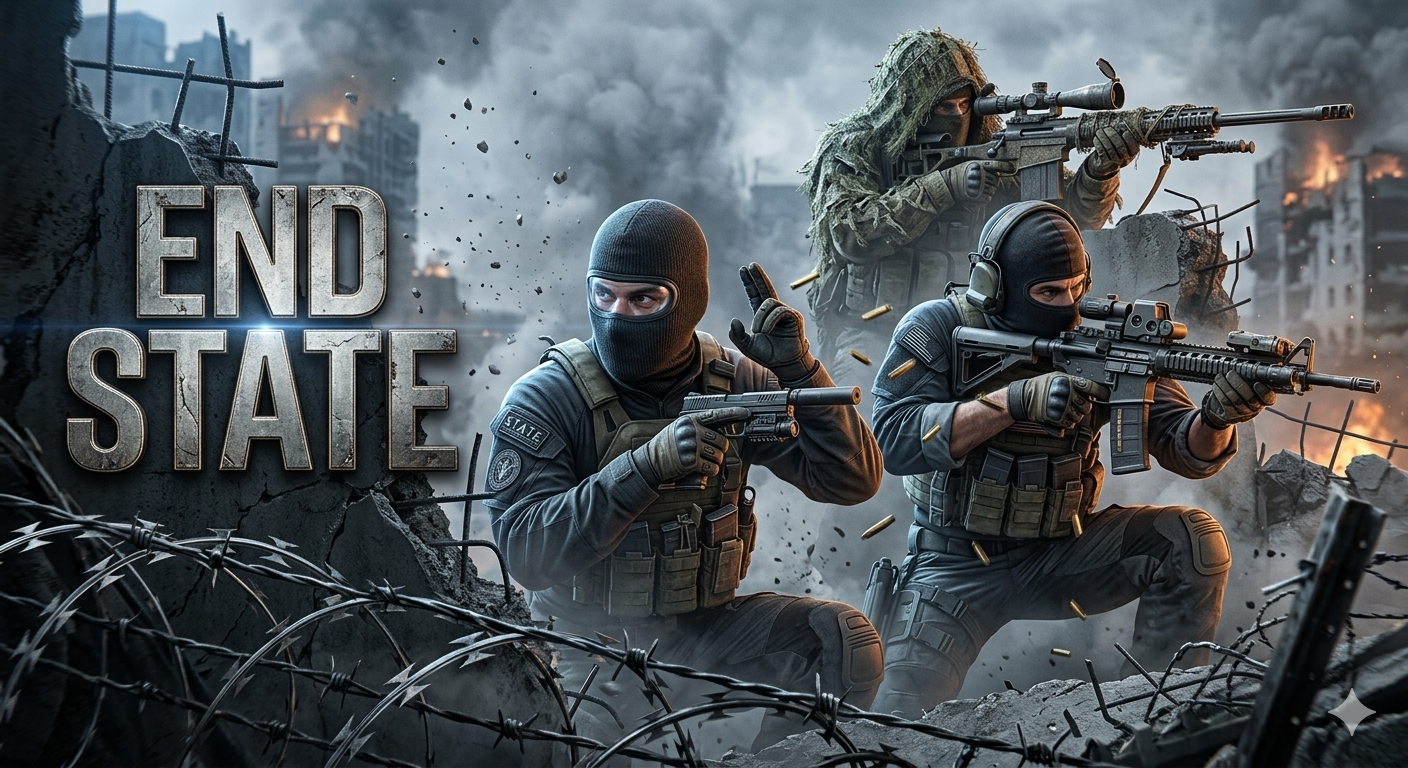

Lucknow: As the smoke clears from battlefields and ceasefires begin to hold, the real question facing nations is not who won the war, but what kind of peace will follow. The “end state” of a war, the political, social, and economic condition left behind after conflict which often determines whether stability can endure or violence will return.
History has shown that wars do not truly end when guns fall silent. From shattered cities to divided societies, the aftermath of conflict reveals the deeper challenges of rebuilding nations, restoring trust, and securing lasting peace. In today’s world of prolonged conflicts and geopolitical tensions, defining the end state of war has become as important as the conduct of war itself.

The end state of any war refers to the final political, military, economic, and social condition that emerges once the conflict has concluded. It is not simply the moment when fighting stops, but the broader outcome that defines what the war achieved, how peace is maintained, and what kind of future is created for the countries and societies involved. In military and political studies, the concept of an “end state” is extremely important because wars are generally fought to accomplish specific objectives. Without a clearly defined end state, conflicts can continue indefinitely, causing unnecessary destruction and instability.
An end state includes several dimensions. The first is the military dimension, which concerns whether the armed forces of one side have achieved victory, reached a stalemate, or suffered defeat. This may involve territorial control, destruction of enemy capabilities, or establishment of security. For example, during World War II, the military end state for the Allied powers was the unconditional surrender of Germany and Japan. Military success alone, however, does not guarantee lasting peace.
The second dimension is the political end state. Wars are usually fought for political goals such as independence, regime change, territorial expansion, or protection of national interests. The political end state defines whether these goals were achieved. In many cases, political settlements are formalized through treaties, negotiations, or international agreements. For instance, the end state of the Cold War was not a direct military victory but the collapse of the Soviet Union and the emergence of a new international political order dominated by the United States.
Another important aspect is the economic end state. Wars often devastate economies by destroying infrastructure, reducing production, and creating financial burdens. A successful end state requires economic recovery and reconstruction. After World War II, countries such as Germany and Japan rebuilt their economies with international assistance and eventually became major economic powers. Without economic stability, societies affected by war may experience poverty, unemployment, and renewed unrest.

The social and humanitarian dimension is equally significant. War leaves deep impacts on civilians, including displacement, trauma, and loss of life. The end state should ideally involve reconciliation, justice, and social healing. In countries where ethnic or religious divisions fueled the conflict, peacebuilding efforts become essential. The establishment of institutions that protect human rights and ensure fairness can help prevent future violence. If societies fail to heal, resentment may persist and lead to further conflict.
A well-defined end state is essential for military strategy. Leaders and commanders need to understand what outcome they seek before entering a conflict. This idea is closely connected to the famous military thinker Carl von Clausewitz, who argued that war is a continuation of politics by other means. According to this view, military operations should always support political objectives. If leaders do not define a realistic end state, wars may become prolonged and costly. The Vietnam War is often cited as an example where unclear objectives and shifting goals contributed to prolonged fighting and eventual withdrawal without decisive success.
In modern warfare, defining the end state has become even more complex. Many contemporary conflicts involve non-state actors, terrorism, cyber warfare, and civil wars rather than traditional battles between nations. In such cases, victory may not mean complete military defeat of the enemy but rather achieving stability and reducing threats to an acceptable level. The wars in Afghanistan and Iraq demonstrated how difficult it can be to establish a stable political and social order even after military victories. The ongoing conflicts between Russia-Ukraine, Israel-Hamas- Palestine, US- Iran appear to be nowhere near any end state objectives.
Ultimately, the end state of a war determines whether peace will be temporary or lasting. A successful end state creates security, political stability, economic recovery, and social reconciliation. A failed end state may leave unresolved tensions that eventually lead to renewed violence. Therefore, understanding the end state is crucial not only for military planners and political leaders but also for societies seeking sustainable peace after conflict. Achieving the end state of war is not merely about securing victory on the battlefield. It ensures that the sacrifices of war lead to a future free from fear, death & destruction, and recurring conflicts.